Behind the Veil.
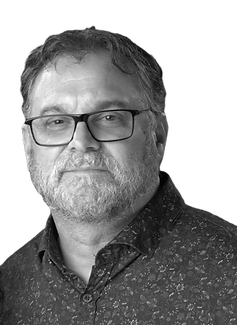
My name is Gino Franceschetti and I have been beekeeping over a decade. After watching an episode on the importance of bees on CBC's "The Nature of Things", hosted by Dr. David Suzuki, my interest in beekeeping grew. Beekeeping often turns into a lifelong obsession because there is always something new to learn about these "amazing little creatures".

About the Beekeeper.
As a member of the Ontario Beekeepers’ Association (OBA), I hold certifications in “Integrated Pest Management” from the OBA’s Technology Transfer Program (TTP). I am the resident beekeeper and lead for beekeeping activities at the Kingbridge Centre which is located in the Township of King/King City. The centre offers an immersive apiary experience through its Innovation Hub and Pollinator Village. I am retired from Seneca Polytechnic, a post-secondary educational institution. As a retiree, I volunteer and continue to manage their hives while training and mentoring the next generation of beekeepers. A significant contribution to both local biodiversity and hands-on education.
With a Master’s in Education (M.Ed.), I bring a professional pedagogical approach to the world of apiculture, ensuring that complex biological concepts are accessible to every learner. This academic foundation allows me to design high-quality beekeeping workshops and structured courses that cater to diverse learning styles, moving beyond simple instruction to true skill mastery. Whether I am leading a group in the apiary or providing one-on-one mentorship, my goal is to empower new and experienced beekeepers with the critical thinking and practical techniques necessary to support healthy, thriving hives.
My bee yard is located in the Township of Tiny, located within the County of Simcoe, occupying most of the Penetanguishine Peninsula. There, I support local farmers as a key way to bolster regional pollination and agricultural resilience. Tiny is a proud Bee City Canada and my mentorship aligns perfectly with the township’s environment goals. The township actively promotes pollinator meadows and gardens in public parks and encourages residents to avoid pesticides and plant native species to support local forage.
I am an active board member of Operation BeeStrong. This incredible and impactful mission uses apiculture as a therapeutic tool for mindfulness and grounding for military personnel and first responders who are high risk for developing Post-Traumatic Stress Disorder (PTSD) and Post-traumatic Stress Injuries (PTSI), restoring purpose and sensory regulation. The intense focus required to manage hives helps block out negative thoughts, while the calming vibration of bees and connection with nature offer a peaceful and meditative experience that aids coping and stress.
As a lifelong learner, stepping into Cornell University’s Master Beekeeping program has been humbling and exhilarating challenge that perfectly bridges my years of hands-on experience with rigorous scientific understanding. Despite having kept bees for over a decade, this journey has pushed me to "up my game," moving beyond simple hive management to a deep dive into honey bee evolution, chemical ecology, and complex Integrated Pest Management (IPM) principles. There is a unique thrill in finally connecting the behaviors I’ve observed in my own apiary to the research conducted at Cornell, a new found confidence to serve as a credible mentor in my local community. This program has taught me that the more I think I know about bees, the more there is to discover—reinforcing my belief that true mastery is not an end point, but a commitment to never stop being awestruck by the hive.
Bee populations in the world have been threatened by climate change, mono-culture and pesticides. Fewer bees mean fewer pollinators, fewer crops and less plant diversity. Bees are part of the biodiversity on which we all depend for our survival.